When Talent Is Not the Problem: Engineering Better Access to Sports

Some of the biggest barriers in sports are surprisingly small: a grip that does not quite fit, a support designed around someone else’s body, or a practice session with no coach nearby to explain what went wrong. As a competitive precision-rifle athlete, I have spent years noticing tiny details because a few millimeters of movement or a slight change in balance can alter a shot. Over time, I began noticing something larger: athletes were sometimes limited not by effort or ability, but by whether the right equipment or feedback was available.
Designing Around the Athlete
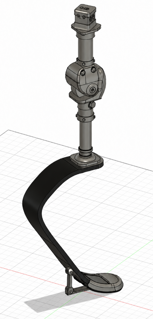
That realization helped lead me to CADletics, a project centered on adaptive sports equipment and individualized design. Traditional manufacturing works best when many people need the same product, while a para-athlete may need something more specific, such as a grip shaped around a particular movement or a support positioned differently. Computer-aided design and 3D printing make those one-off problems practical because a part can be modeled, printed, tested, adjusted, and printed again.
Through CADletics, athletes identify barriers they encounter, and volunteer engineers work with them to develop and refine solutions. I expected the hardest part to be designing better parts, but I gradually learned that listening well matters even more. An athlete can explain what feels awkward, what takes too long to adjust, or what they wish they could do independently, and those observations often define the real problem better than an engineer can from the outside.
When the Missing Tool Is Feedback
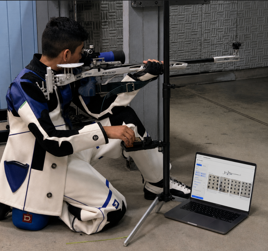
The Parallax Coach grew from a different problem that I knew firsthand. In precision sports, a target tells you where the shots went, but it does not explain whether a poor result came from position, balance, timing, movement, or another variable. I have been fortunate to work with experienced coaches, but many athletes train alone or live far from someone who can notice those details.
The Parallax Coach grew from my attempt to make feedback more accessible by combining training information with ideas from physics, motion analysis, and data interpretation. I do not see software as a replacement for a good coach, because coaching depends on judgment, trust, and an understanding of the athlete that cannot be reduced to measurements. What technology can do is help an athlete make better use of target images, scores, video, or sensor data when a coach is not there.
What Both Projects Changed for Me
Although CADletics involves prototypes and physical parts while The Parallax Coach involves targets, software, and data, both have pushed me toward the same approach: start with the person experiencing the problem rather than with the technology you want to use. When students learn about artificial intelligence, computer vision, 3D printing, or new sensors, the instinct is often to ask what can be built with them, but I have found it more useful to ask what is actually making something difficult for someone. Only after understanding that problem clearly should the technology enter the conversation.
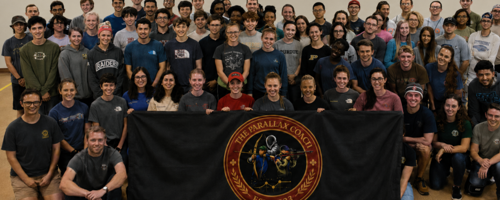
For other students who want to build something, I would start there rather than searching for a huge idea. Pay attention to a community you know, notice the frustrations people have learned to work around, ask questions before offering solutions, and be willing to build something imperfect enough that another person can tell you what is wrong with it. Sports taught me to notice tiny differences because they can change a performance; building CADletics and The Parallax Coach has taught me that those same small details can change whether someone gets to participate at all.
About the Author: Ashwath Ram is a NSHSS member and student at Edison Academy Magnet School in New Jersey and a national-level precision rifle athlete. He is the founder of CADletics, a volunteer engineering initiative that develops individualized equipment for para-athletes, and The Parallax Coach, a platform designed to make precision-sports feedback more accessible through physics, motion analysis, and data. His work explores the intersection of engineering, accessibility, technology, and athletics.
Learn more about CADletics and The Parallax Coach.